
Campagnolo
Campagnolo stands as the architectural foundation of modern derailleur systems and precision drivetrain engineering.
Component PartnerDescription
Campagnolo stands as the architectural foundation of modern derailleur systems and precision drivetrain engineering. Founded by Tullio Campagnolo in Vicenza, Italy, the brand has dominated professional road racing for nearly a century through relentless innovation and an uncompromising commitment to mechanical precision. The quick-release mechanism—Campagnolo’s first revolutionary contribution—solved a practical problem that enabled cyclists to remove wheels without tools, a foundational technology now universal across the sport. Beyond that singular invention, Campagnolo’s layered groupset hierarchy—from the accessible Chorus through the refined Super Record to the competition-only Record—set the standard by which all competitors are measured. In recent years, the brand has extended its expertise into gravel and mountain cycling with the Ekar and Exa groupsets, proving that Campagnolo’s engineering philosophy transcends road racing dogma.
For professional cyclists and connoisseurs, Campagnolo represents mechanical poetry: each shift a precisely engineered orchestra of cable tension, spring load, and indexed detents that transform rider intention into instantaneous gear changes.
History
Invention and Post-War Foundation (1933–1950s) Tullio Campagnolo founded Campagnolo in 1933 in Vicenza, a city already renowned for metalworking precision. A cyclist himself, Campagnolo invented the quick-release hub in 1930—inspired by frustration at a race when he couldn’t remove a wheel with frozen fingers—and patented it through his new company. The quick-release represented a paradigm shift: bicycles were no longer machines to be fixed at home but portable equipment for competitive sport. Throughout the 1930s and into the postwar era, Campagnolo expanded into derailleurs and shifters, each innovation building upon mechanical principles that remain recognisable today. By the 1950s, Campagnolo components appeared on every major European racing team.
The Derailleur Revolution (1960s–1970s) Campagnolo’s greatest period of innovation coincided with the globalisation of professional cycling. The development of indexed shifting—derailleur systems that clicked into precise gear positions rather than requiring friction adjustment—transformed the sport. The Super Record groupset of 1974 represented the pinnacle of mechanical indexing technology. Campagnolo’s control over the professional peloton was near-absolute; using non-Campagnolo equipment at the Tour de France was considered eccentric. The brand’s colours—the distinctive silver and red of Record—became synonymous with victory.
Market Dominance and the Shimano Challenge (1980s–1990s) The 1980s saw the rise of Japanese manufacturers, particularly Shimano, who undercut Campagnolo’s prices and offered comparable performance. Yet Campagnolo maintained dominance in professional racing through superior component reliability and continuous refinement. The introduction of Chorus (a mid-range groupset) in 1985 addressed the value market without diluting the Record brand. Throughout the 1990s, Campagnolo pushed mechanical indexing to its limits, achieving 10-speed drivetrains and then 11-speed—a technical achievement that required extraordinary precision in spring loading and cable pull ratios.
11-Speed Mastery and Gravel Expansion (2000s–Present) Campagnolo’s 11-speed systems proved superior to competitor alternatives and became the standard for European professional cycling. However, the rise of electronic shifting (Shimano Dura-Ace Di2, 2009) and the maturation of other manufacturers forced Campagnolo to evolve. The introduction of Ekar (a gravel-specific groupset launched in 2021) demonstrated the brand’s ability to extend engineering excellence beyond road racing. With 13-speed cassette ranges and refined geometry optimised for mixed terrain, Ekar proved that Campagnolo’s precision philosophy had universal application. Today, Campagnolo remains the preferred groupset of professional road racing, with electronic shifting options complementing their mechanical mastery.
Heritage and the Religion of Precision Campagnolo’s identity rests on mechanical precision as a philosophical principle. In an era of electronic shifting and wireless control, the brand maintains that properly engineered mechanical systems offer advantages—lighter weight, independence from batteries, tactile feedback—that appeal to riders who value intimate connection with their machines.
Source
- Website: campagnolo.com
On Our Bikes
Groupset
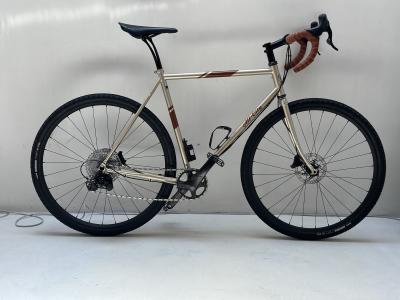
All City Space Horse
612 Select CroMoly Steel · 55cm
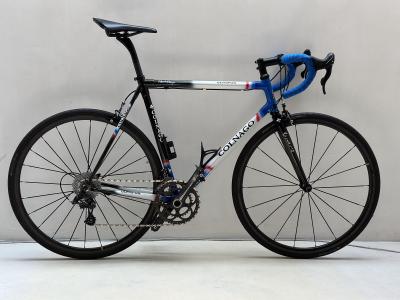
Colnago C40 Team Olympus
Carbon Fiber · TBD
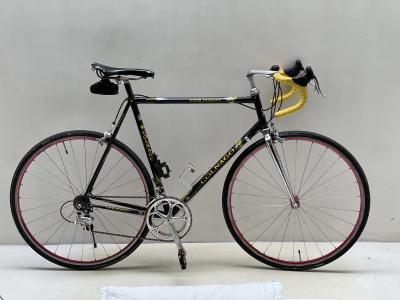
Colnago Master 1996
Columbus Steel · 57cm
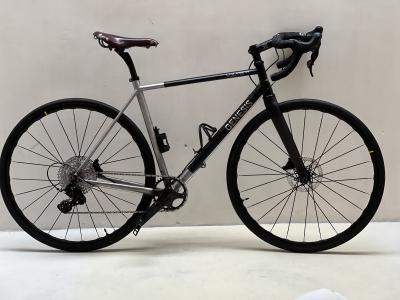
Genesis Volare 931 Disc
Reynolds 931 Steel · 54cm
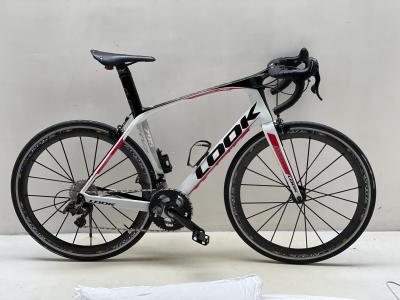
Look 795 Light
1.5k Carbon (HM IM, HR Ultra-light) · S (54)
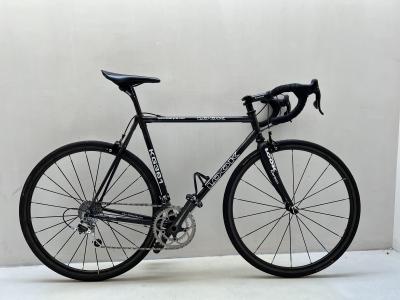
Look KG 361
Carbon HR · 54cm
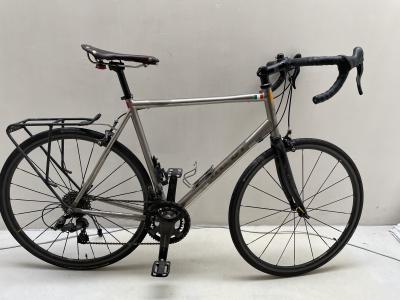
Nevi Grimsel
3AL-2.5V Titanium Grade 9 · 54cm
Principia Rex Pro
Aluminium · 56cm
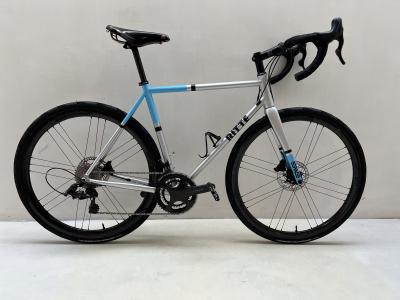
Ritte Phantom
Reynolds 725 Steel · 54 (Medium)
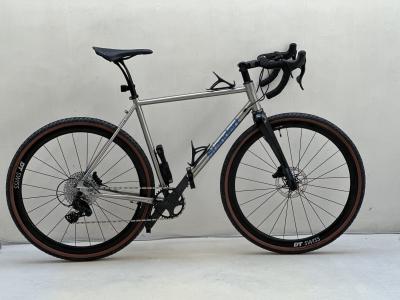
Standert Erdgeschoss
Stainless Steel · 54cm
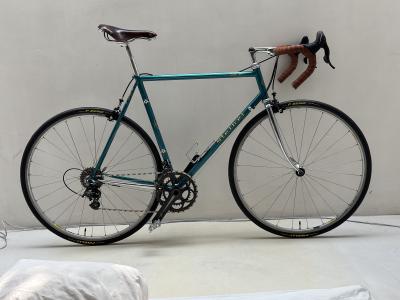
Stelbel Strada Oria
Steel (Oria star-shaped tubing) · 56cm
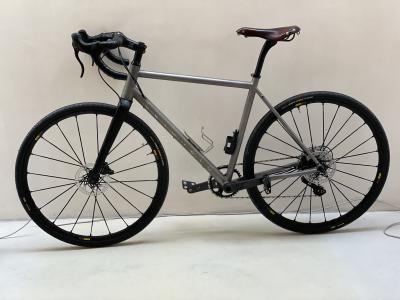
Veloheld IconX Titan
TiAl3V2.5 Titanium · M