
Continental
Continental entered the cycling market as a diversified industrial rubber manufacturer with automotive roots, bringing to the bicycle tyre category the same rigorous engineering standards that secu...
Component PartnerDescription
Continental entered the cycling market as a diversified industrial rubber manufacturer with automotive roots, bringing to the bicycle tyre category the same rigorous engineering standards that secured their position as one of the world’s largest tyre producers. Their cycling tyre lines—particularly the legendary Grand Prix series and the modern 4000 and 5000 generations—combine empirical testing, advanced compound chemistry, and decades of motorsport heritage to deliver consistent grip, durability, and predictable handling across varied road conditions. The BlackChili compound technology represents Continental’s commitment to material science: an advanced rubber formulation that balances grip in wet conditions, rolling resistance reduction, and puncture protection in ways that few competitors match. Though Continental manufactures car and truck tyres for millions of vehicles worldwide, their cycling division remains uncompromising in its pursuit of performance, treating the bicycle tyre as a precision component worthy of the same attention given to Formula One racing slicks.
For cyclists seeking tyres from a manufacturer with unquestionable expertise in rubber chemistry and compound performance, Continental represents the intersection of industrial scale and specialised cycling knowledge.
History
Founding and Industrial Expansion (1871–1920s) Continental was founded in 1871 in Hanover, Germany, initially as a rubber manufacturer supplying gaskets, seals, and tubing to emerging industrial sectors. As pneumatic tyres revolutionised transportation in the 1890s, Continental pivoted to become a major automotive tyre manufacturer. By the 1920s, the company was a continental European leader in rubber technology. This industrial foundation—investment in research, compound chemistry, manufacturing consistency—would eventually transfer to their cycling division.
Entry into Cycling (1960s–1980s) Continental’s serious entry into the cycling tyre market came in the 1960s, initially through manufacturing OEM tyres for bicycle manufacturers. However, by the 1970s, Continental released branded cycling tyre lines, leveraging their automotive expertise. The Grand Prix series became the gold standard for road cycling—offering superior grip, wear resistance, and predictability compared to existing alternatives. Touring cyclists appreciated Continental’s tyre durability and constructive approach to reliability; racers valued the consistent performance across temperature and moisture conditions.
The Grand Prix Evolution and Domination (1990s–2000s) The 1990s and 2000s saw Continental refine the Grand Prix line through continuous iteration: Grand Prix 2000, Grand Prix 3000, Grand Prix 4000, and finally Grand Prix 5000. Each generation represented incremental but meaningful improvements in rolling resistance, grip, and puncture resistance. The Grand Prix 4000 became perhaps the most successful road tyre in cycling history—light, fast, reliable, and available in multiple widths for road and audax cycling. Professional teams standardised on Continental tyres, and the brand achieved near-ubiquity in European cycling. The tyre’s reputation for reliability in wet conditions separated it from lightweight competitors.
BlackChili Compound and Performance Materials (2010s–Present) The introduction of BlackChili compound technology in the 2010s represented a quantum leap in Continental’s proprietary materials science. BlackChili is a crumb-rubber formulation that incorporates natural and synthetic rubber polymers optimised for grip at the microscopic level. Rather than trade off rolling resistance against wet-weather grip (a common engineering compromise), BlackChili achieves both simultaneously. The 4000S II and later 5000 generations feature BlackChili, marking Continental’s transition from “tyre manufacturer entering cycling” to “cycling specialist with global manufacturing capacity.” Today, Continental sponsors professional WorldTour teams and remains a primary choice for cyclists prioritising reliability and tested performance.
Diversification and Specialisation While automotive tyres remain Continental’s core business—they manufacture tyres for millions of cars annually—the cycling division has earned autonomy in product development. This separation allows cycling specialists to innovate without automotive constraints, whilst benefiting from the conglomerate’s resources in materials research and testing infrastructure.
Source
- Website: continental-tires.com
On Our Bikes
Tires
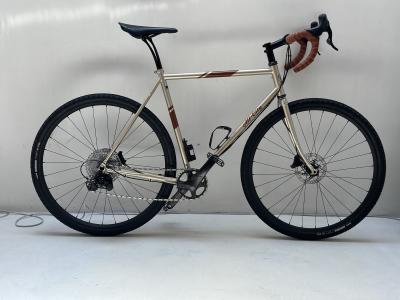
All City Space Horse
612 Select CroMoly Steel · 55cm
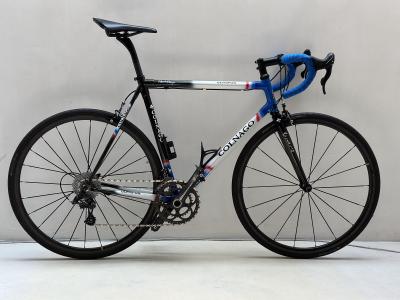
Colnago C40 Team Olympus
Carbon Fiber · TBD
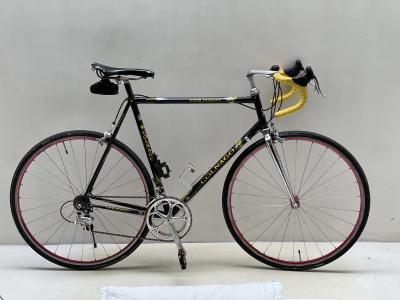
Colnago Master 1996
Columbus Steel · 57cm
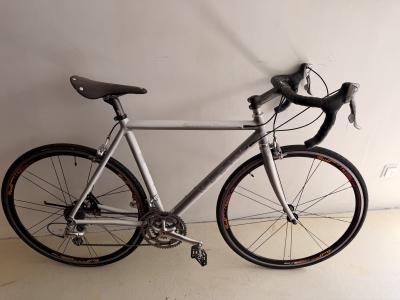
Klein Quantum Race
Aluminium · 53cm
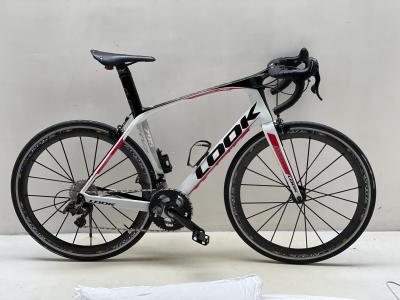
Look 795 Light
1.5k Carbon (HM IM, HR Ultra-light) · S (54)
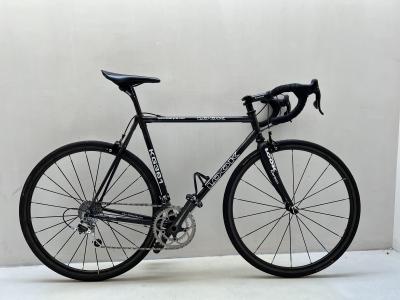
Look KG 361
Carbon HR · 54cm
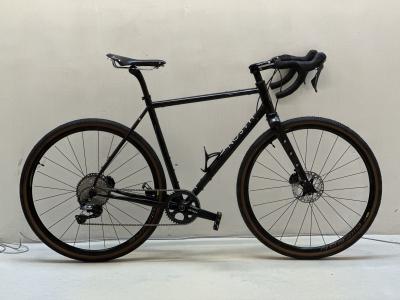
Mason Exposure
Steel (Dedacciai Zero Uno, Reynolds 631) · L (56cm)
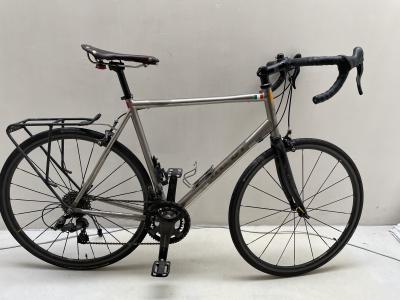
Nevi Grimsel
3AL-2.5V Titanium Grade 9 · 54cm
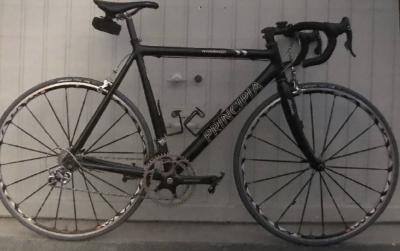
Principia Rex Pro
Aluminium · 56cm
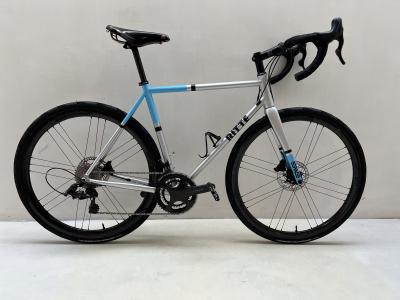
Ritte Phantom
Reynolds 725 Steel · 54 (Medium)