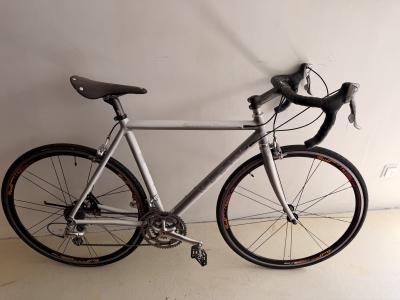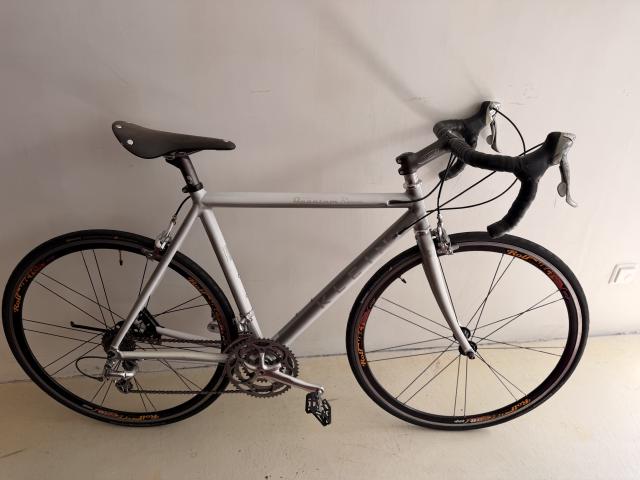

Klein
- Frame Builder
- 1 bike
Klein was an American bicycle manufacturer that pioneered the use of large-diameter aluminium alloy tubing to create frames of extraordinary stiffness and remarkably low weight.
Description
Klein was an American bicycle manufacturer that pioneered the use of large-diameter aluminium alloy tubing to create frames of extraordinary stiffness and remarkably low weight. Based in Chehalis, Washington, the brand became legendary among cycling enthusiasts not only for its engineering innovation but also for its spectacular paint finishes—bold, gradient colour schemes that made every Klein frame an unmistakable work of art. Klein bicycles represented a fusion of aerospace-influenced engineering and visual flamboyance that no other manufacturer could replicate, earning them a devoted cult following that endures decades after production ceased.
History
The Founder’s Vision
Gary Klein (born June 9, 1952) was a student at the Massachusetts Institute of Technology when he first explored the potential of aluminium in bicycle frame construction. During MIT’s Independent Activities Period in 1973, Klein and a group of fellow students, working under Professor Buckley, built an aluminium-framed bicycle. After graduating in 1974 with a degree in chemical engineering, Klein was convinced that large-diameter aluminium tubes could outperform the traditional steel tubing used by virtually every frame builder of the era.
From Prune Barn to Factory
In 1975, Klein and three partners built a limited run of aluminium frames at the MIT Innovation Center. He then relocated to some disused buildings on his parents’ farm in San Martin, California—structures that had previously been used for dehydrating prunes. In 1977, he patented the use of large-diameter aluminium alloy tubes to increase frame stiffness, a concept that would eventually reshape the entire bicycle industry. By 1980, Klein moved operations to Chehalis, Washington, where he began building bicycles out of a barn in nearby Mary’s Corner in 1981. The company grew steadily, eventually expanding from a modest workshop to a 70,000-square-foot factory.
Innovation and Artistry
Klein frames were distinguished by two key attributes: their oversized aluminium tubing—which delivered a ride quality that was stiffer and more responsive than anything else available—and their legendary paint schemes. Klein pioneered multi-colour gradient finishes that became iconic in the cycling world, with names like “Backfire,” “Storm,” and “Dolomite” evoking the boldness and creativity of the brand. Each frame was essentially hand-painted, making every Klein bicycle a unique object.
Acquisition and Legacy
In 1995, Klein was acquired by Trek Bicycle Corporation. Production initially continued in Chehalis, but the original factory closed in 2002 as manufacturing moved to Trek’s headquarters in Waterloo, Wisconsin. Distribution in the United States ceased in 2007, and worldwide production ended entirely in 2009. Though the brand is no longer active, Klein bicycles remain highly sought after by collectors, and the Klein aesthetic continues to influence bicycle design and paint culture to this day.
Source
- Website: No longer active (brand defunct since 2009)
- Reference: Klein Bicycle Corporation — Wikipedia
Our Bikes
1 bikes from Klein in our collection